DISSERTATION ON FIRST PRINCIPLES OF GOVERNMENT by Thomas Paine.
INTRODUCTION AND BACKGROUND.

“ … those who may happen to be first convinced have not a right to persecute others, on whom conviction operates more slowly. The moral principle of revolutions is to instruct, not to destroy...”
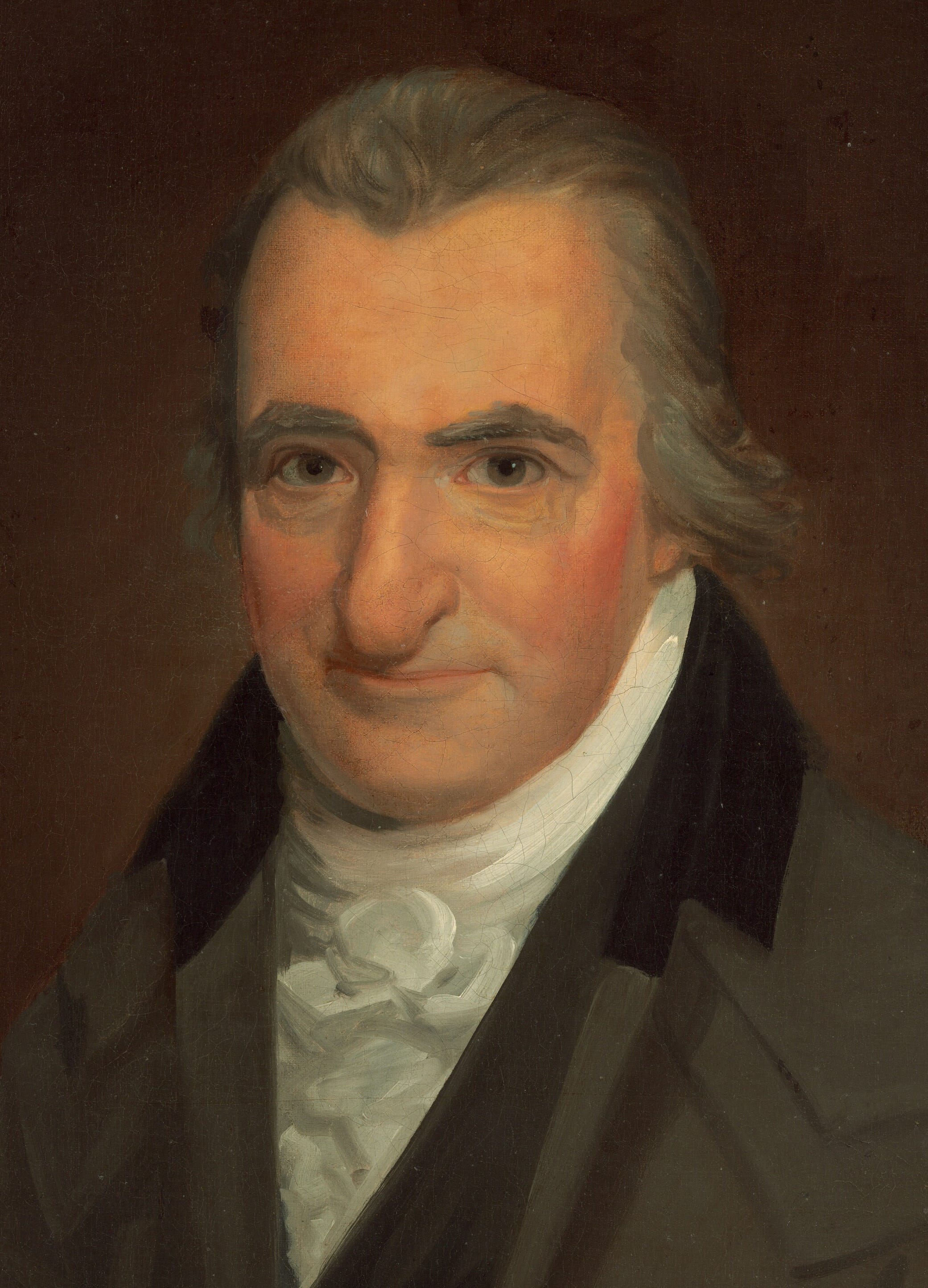
Thomas Paine knew exactly what he was talking about in this quote from our referenced work. He had just barely survived the shock and grief of imprisonment and the sight of his closest friends and colleagues marched from their neighboring cells and guillotined outside his window. He fell desperately ill as a result, nearly died and was finally retrieved from prison by the newly appointed Minister/Ambassador to France, James Monroe. Paine was so ill upon his release in November of 1794 that Monroe and his wife expected he would die in their care; but he survived and recovered well enough to write this work with his characteristic clarity and force.
The bloodiest period of the French Revolution had passed and France’s third constitution, the Constitution of the Year III (1795) was being debated in the Convention/Assembly, to which Paine had been re-admitted along with the surviving members of the former Girondin deputies. Paine was worn and depressed from all he had endured, but he was convinced to speak before the Convention on July 8. He was alarmed that the new constitution would abandon universal suffrage and he asked the Convention to again consider the first principles of government.
The pamphlet was written and published at this time and recapitulates Paine’s speech to the Convention. It was addressed originally to the countries of the Lowlands, Holland and Belgium, where his Rights of Man was not as widely distributed and known. He was acutely aware of the situation there, not least because his cell-mates in prison were Belgian reformers who had helped save his life. But the pamphlet was published in Paris and continued to be used in the debates surrounding the new constitution
Paine’s Dissertation on First Principles of Government is his most spare and concise expression of his ideas on government.
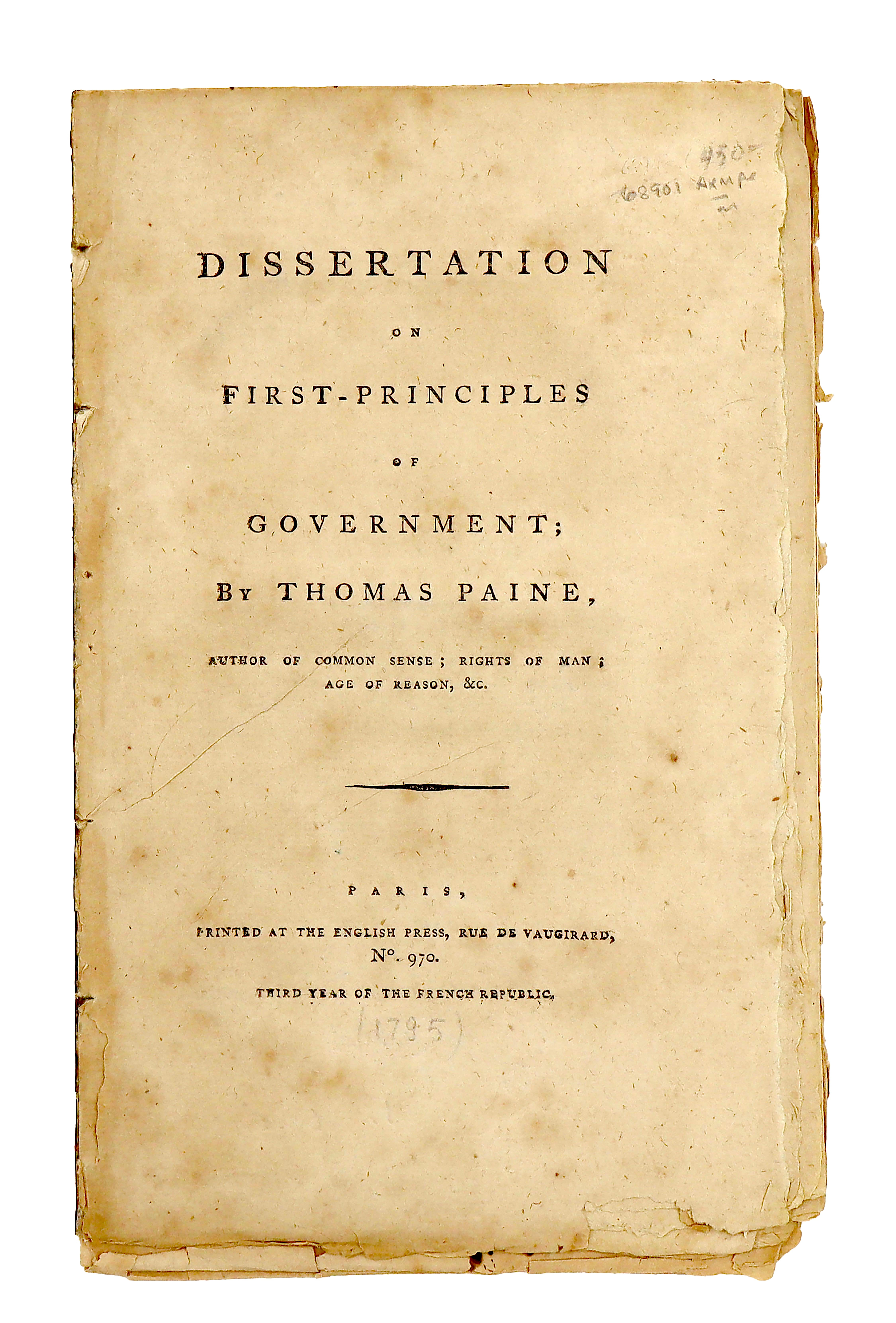
The full text of the pamphlet appears in the following post here at REVOLUTION, REFORM, AND HISTORY.